
Yearly Archives: 2019

JinxKittie Cosplay – Patreon has some stunning content creators

WolfQueenLydia on Patreon
BEST CUBE #7 #youtubevids
DeepPCB Routes Your KiCAD PCBs
Computers can write poetry, even if they can’t necessarily write good poetry. The same can be said of routing PC boards. Computers can do it, but can they do it well? Of course, there are multiple tools each with pluses and minuses. However, a slick web page recently announced deeppcb.ai — a cloud-based AI router — and although details are sparse, there are a few interesting things about the product.
First, it supports KiCAD. You provide a DSN file, and within 24 hours you get a routed SES file. Maybe. You get three or four free boards –apparently each week — after which there is some undisclosed fee. Should you just want to try it out, create an account (which is quick and free — just verify your e-mail and create a password). Then in the “Your Boards” section there are a few examples already worked out.
We haven’t tried the service yet, but reading notes from people who have doesn’t give us a great feeling. Apparently, the router only wants two-layer boards with a limited number of wires, for the free version at least. One user reported they used up all three boards and only got error results back.
The real question is do we need AI routing? If you have parts well placed, routing isn’t that hard and there are other autorouters that can do a great job. Of course, many people won’t want to trust their designs to a cloud service. However, the technology could be interesting, especially if it could move things around and work towards different goals (e.g., low noise, minimum size, etc.).
There are others, of course. Then again, you can do it all on the cloud, if you like.
We couldn’t see a picture of an example PCB from the system, so our header image comes from a different source. c-g. [CC BY 2.0]
source https://hackaday.com/2019/12/01/deeppcb-routes-your-kicad-pcbs/
Real Doctor Reacts to THE GOOD DOCTOR #4 #youtubevids
Homeless Guy Builds a Hobo Town – Hobo Tough Life Update #youtubevids
Top 10 CSS Tricks You Didn’t Know! #youtubevids
Iron Age Celtic Roundhouse: Building the Timber Frame Foundation | Bushcraft Project (PART 2) #youtubevids
Ridiculous Bible Verses You’ve Never Heard #youtubevids
Most Oddly Satisfying Compilation #45 #youtubevids
I Created a PERFECT SNAKE A.I. #youtubevids
Matt Dillahunty – Caller propose to have creationism in science class – Atheist Experience #youtubevids
Antique Egyptian Dagger – Impressive RESTORATION #youtubevids
You’ve Got Mail?
Life is full of tough decisions, such as deciding whether you want to go to the end of the drive to check if the mail has arrived. These questions are made even more arduous in the winter months, but [Catpin] has a solution. The Mail Box Alert uses an Electric Imp, a solar panel and a proximity sensor to let you know if you’ve got mail.
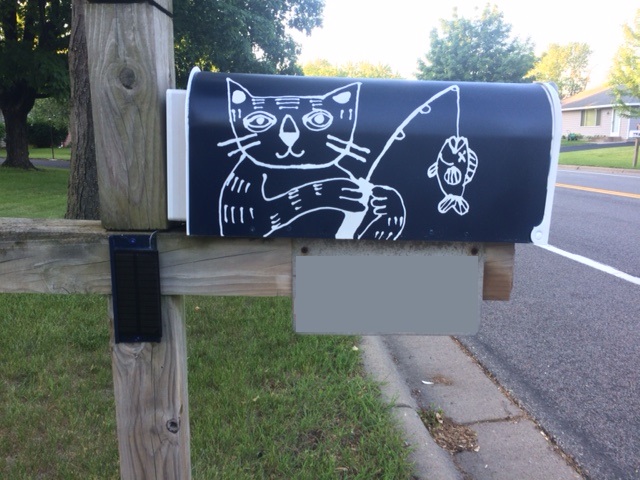 It’s a neat build, with the brains provided by that Electric Imp which handles most of the heavy lifting. This wakes up every five minutes and checks whether the status of a small proximity sensor has changed. If it has, it pings a website. The unit sits at the bottom of the postbox, so if your friendly neighborhood post person has put in any letters, it will have changed. The Imp is powered by a small battery, which is in turn charged by a solar panel. That means that it doesn’t require any power cables or other wiring, as long as it is in the range of WiFi. With the addition of a 15-hours overnight deep sleep, [Catpin] found that the whole thing could be run from a couple of 18650 LiPo batteries.
Perhaps the most interesting part of the writeup was discussing the problems that he found with the build, such as the fact that a LiPo battery won’t perform that well in a Wisconsin winter. So, this was replaced with a Lithium Iron Phosphate battery that should be a bit more tolerant of the chill. There is also a writeup on how to create the same project using an ESP8266 if required.