
Yearly Archives: 2019
The Story Of The Quickening: Mercurial Metal
Of all known metals, mercury is probably one of the most famous, if only for its lustrous, liquid form at room temperature. Over the centuries, it has been commonly used in a wide variety of applications, including industrial chemical processes, in cosmetics, for telescope mirrors, thermometers, fluorescent lamps, dental fillings, bearings, batteries, switches and most recently in atomic clocks.
Though hardly free from the controversy often surrounding a toxic heavy metal, it’s hard to argue the myriad ways in which mercury has played a positive role in humanity’s technological progress and scientific discoveries. This article will focus both on its historical, current, and possible future uses, as well as the darker side of this fascinating metal.
Shiny and Useful
Mercury has been highly prized for its use in art and decorations. It’s historically known to have been used in mercury fountains — exactly as it sounds, these were artistic fountains using mercury rather than water — with the most recent example being Alexander Calder’s 1937 Mercury Fountain. Yet for thousands of years, from the Mayans (Temple of the Feathered Serpent in Teotihuacan) to the Egyptians and the Chinese (Emperor’s Qin tomb), mercury was held in high esteem, with many considering it to hold special properties in addition to its remarkable physical properties.
Unfortunately, this led to it being used in medicine, especially in China and Tibet, where it was thought to prolong life, heal injuries and generally improve one’s health. It is rumored that a mixture of mercury and crushed jade given as an immortality mixture was what killed Emperor Qin. Alchemists considered mercury to be a Prima Materia (First Matter) from which other metals are derived.
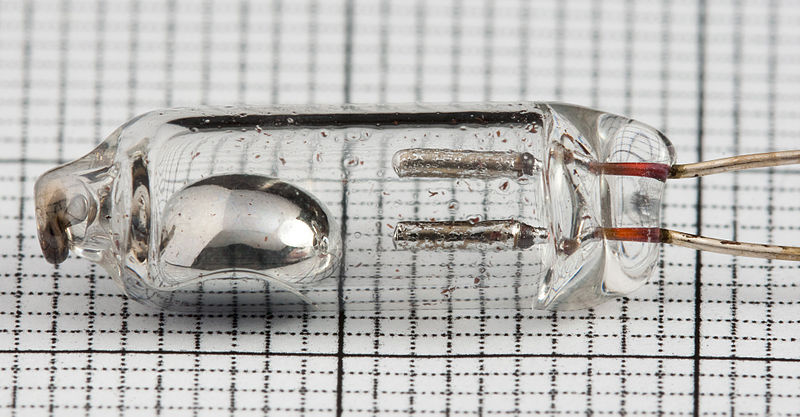
Clearly more practical was the discovery around 500 BC of amalgams (from medieval Latin amalgama, “alloy of mercury”), the mixing of mercury with other metals which led to its use for dental fillings in China before 1000 AD and in Europe around 1528 AD. Much like the Chinese amalgams back then, dental amalgams today consist of mercury and a metal alloy of silver, tin, and copper.
While polymer resins are being used more commonly instead of amalgam in dentistry, amalgam remains superior in terms of longevity and durability, except for situations where the restored area would be directly visible (polymer resins being white), or the hole in the tooth is fairly small. Here polymer resins are the preferred material.
Despite the scares about mercury poisoning from the elemental mercury in amalgam dental fillings, studies have shown that the amounts of mercury released is low enough that it should pose no health risks. Regardless, dental offices in the EU are required to treat amalgam waste as hazardous waste. US dental offices are facing similar measures, but flushing the amalgam waste down the drain is still common practice.
The Distinction Between Useful and Hazardous
Even outside of dental amalgam, mercury manages to provoke fierce debates about its uses and perceived dangers. One of these involves the many organic compounds that contain mercury, the so-called organomercury compounds. This group includes methylmercury (commonly found in fish like tuna and salmon), ethylmercury , dimethylmercury, diethylmercury, and merbromin.
Commonly used as a preservative agent due to its antiseptic and antifungal properties, thiomersal is regularly used in everything from vaccines to ophthalmic (e.g. eyedrops) and nasal products as well as things like tattoo inks and mascara, where long-time sterility is essential. In the body, thiomersal is broken down into ethylmercury, which is significantly less dangerous to the body than methylmercury. While refrigeration is an alternative to thiomersal, it requires an uninterrupted cooling chain, which can be problematic in some areas, leading to the use of contaminated vaccines.
In the US, fears about the ‘mercury’ in vaccines (related to conspiracy theories involving autism caused by vaccines) led to thiomersal being removed from most vaccines despite a lack of scientific evidence for doing so. Due to a lack of data on ethylmercury’s effect on the body in the 1990s, the data for methylmercury was used instead. Later research showed this to be a wrong equivalence, instead showing just how much more harmful methylmercury is.
Incidentally, the same conspiracy theories that led to the removal of thiomersal from most vaccines is linked into a more grand conspiracy theory about autism being caused by environmental toxins, including lead, mercury and other heavy metals. Chelation therapy is supposed to remove these toxins. This is however strongly recommended against as it is not an effective treatment and can lead to kidney and other potentially fatal damage.
Don’t Eat That Fish
Methylmercury is the most common form of organomercury, as it’s formed from inorganic mercury by microbes that live in aquatic systems. The resulting methylmercury is readily consumed by algae, which in turn are consumed by ever larger fish and other aquatic organisms in a process called biomagnification. As a result, the consumption of fish is the largest source of methylmercury and mercury in general for the population.

Mercury poisoning became well known due to the sudden outbreak of the then new Minamata disease in Japan, which turned out to be caused by the release of methylmercury into the environment from chemical factories, ending up in aquatic organisms that the local population would then catch and consume. In Japan this disease would cost 1,784 lives of 2,265 officially identified victims. Other nations experienced their own outbreaks of this disease.
Even without deliberate spills of methylmercury or its precursors, the amount of mercury in the environment is such that for fish species like swordfish, tuna, cod and pike one should not eat more than 170 grams of it per week, to avoid an unhealthy bioaccumulation of mercury in one’s body. Some places like Florida’s Everglades end up acting like scrubbers for mercury that is released in the air, severely raising local mercury levels there, with the advice being to never eat fish caught in those areas.
Mercury Today and Tomorrow
It is hard to think of a world without mercury. Whether it’s in dentistry, industry, laboratories or in astronomy, an essential role is played by mercury in some fashion. In astronomy especially, mercury essentially enables liquid mirror telescopes, which provide a highly effective and low-cost alternative to expensive and fragile glass mirrors. Mercury sees common use as an electrode in chemistry and in X-ray crystallography studies of proteins in structural biology with the multiple isomorphous replacement (MIR) approach, even as its use in more mundane tasks such as diffusion vacuum pumps has diminished over time, it still remains relevant there, as recently covered on Hackaday.

One of the most exciting new applications for mercury in the near future is that Jet Propulsion Lab’s Deep Space Atomic Clock (DSAC). The exciting thing about the DSAC is that it essentially takes the accuracy of a rubidium-based atomic clock (AC) and stuffs it into a package many times smaller. This is all courtesy of the properties of mercury ions which allowed for such a level of miniaturization, allowing it to be used in weight-sensitive applications, such as space probes and satellites.
Mercury in Space
The obvious advantage of the DSAC project is that the high clock stability improves the on-board time-tracking and thus navigation and communication abilities, which would be ideal for deep space missions. This is further detailed in a 2012 JPL paper on the project. It describes the crucial role the onboard timing source has on deep space navigation when it comes to forming multi-way coherent Doppler and range measurements. The essential benefit is that a spacecraft can do more by itself, with higher accuracy and higher useful data rates across the network.

Mercury is similar to rubidium in that it has a hyperfine transition that emits a very precise electromagnetic signal. Much of the miniaturization is enabled by the fact that in a microwave-driven atomic clock (like in current rubidium ACs and the DSAC) the frequency that is required to drive the clock also determines the dimensions of the oscillator which drives the clock. Whereas a rubidium clock uses a paltry ~6.834 GHz, mercury-199 uses 40.5 GHz.
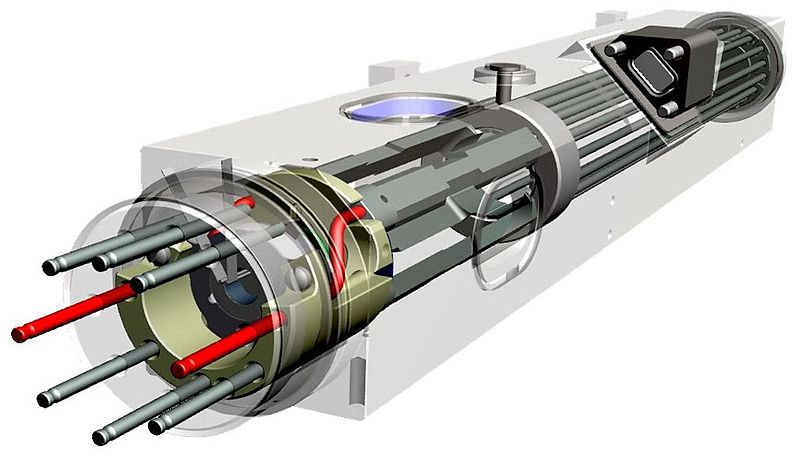
At those higher frequencies, the required circuitry and other components can be made much smaller, resulting in an atomic clock (current version) that’s a mere 29 by 26 by 23 cm at 17.5 kg, yet show no more drift than about 1 microsecond in 10 years of operation.
A DSAC prototype was launched on June 25th 2019 from Kennedy Space Center on a SpaceX Falcon Heavy rocket, as part of the Orbital Test Bed (OTB) satellite, which hosts four additional payloads in addition to the DSAC. NASA activated the DSAC prototype on August 23rd, with the entire mission expected to take about a year.
Being the Right Atom, in the Right Place
Throughout history, mercury has been a bit of a celebrity metal. In addition to its highly unusual liquid state at room temperature, it has enabled many areas of science to progress in ways that would have been difficult without mercury. Whether one looks at diffusion pumps and mercury thermometers, its myriad roles in chemistry and industry, the preservation of vaccines and similar substances, it’s hard to think of a material which has impacted human civilization more in ways that are subtle but ever-present.
Now it appears that mercury will be with us on our journey to the final frontier as well, keeping our space probes and possibly crewed space ships safe as they travel to Mars, Venus, and beyond. Here’s to a long, healthy relationship with a really special metal.
source https://hackaday.com/2019/12/11/the-story-of-the-quickening-mercurial-metal/
Rescue An Expensive Servo With Some Reverse Engineering
[Andrew] had a servo damaged by someone connecting the power supply to the wrong pins (whoops) which fried the microcontroller and a logic level shifter. With a bit of reverse engineering, he successfully restored basic servo functionality by writing some new code. The new code implements only basic features, but that’s enough to save the device from the junk bin.

Why bother reverse engineering a servo? Well, if dollars are reasons then there are many for saving a HerkuleX DRS-0602 from the junk heap; they cost around 320 USD before shipping. Another reason to try is that the microcontroller turned out to be an AVR XMega, which gave [Andrew] confidence in writing some new code.
If you want to understand more about how these servos work, [Andrew] provides good photos of the insides and identifies the major components and their connections and functions. There are some mysteries (such as details of the motor and embedded encoder, which are FAULHABER 2232DBHHO) but [Andrew] figured out enough to write some basic code to allow the servo to work as a standard servo with a UART interface.
Sometimes curiosity drives reverse engineering and repair efforts, sometimes it’s cost, and sometimes it’s both. A $320 servo is certainly worth trying to save, and so are huge observatory telescopes with obsolete servo amps.
source https://hackaday.com/2019/12/11/rescue-an-expensive-servo-with-some-reverse-engineering/
Cloned Gate Remote Does It (Slightly) Better
Ever make something just to see if you could? Yeah, we thought so. [serverframeworks] wanted to see if he could clone the remote that opens his neighborhood gate, inspired by the long distance ding-dong-ditch efforts of [Samy Kamkar].
This clone uses an ATtiny85 and an RF module to emulate and send the frequency that the gate is waiting for. To accomplish that, [serverframeworks] had to figure out both the operating frequency and the timing used by the remote. The crystal inside seemed to indicate 295 MHz, and a quick check of the device’s FCC registration confirmed it. Then he used an SDR dongle to watch the data coming across when he pressed the button, and ran it through Audacity to figure out the timing.
Unfortunately, the 295 MHz crystal is a rare beast, so [serverframeworks] had to transplant the original to the donor RF module. Then it was just a matter of programming the ATtiny85 to send the frequency with the right timing. It actually does a better job since the original has no timing crystal, and the ‘tiny is clocked with a standard 16 kHz oscillator. The code is available within [serverframeworks]’ excellent write-up, and you can see a tiny demo after the break.
There’s more than one way to clone a gate remote. This one leverages MQTT to turn friends’ phones into remotes.
source https://hackaday.com/2019/12/11/cloned-gate-remote-does-it-slightly-better/
Globe Lamp Tracks The ISS For You
Assuming you don’t work at a major space agency, you probably don’t really need to know the exact location of the International Space Station at all times. If you’d like to know just because it’s cool, this lamp is for you.
The lamp is driven by a Wemos D1, which pulls in data on the space station’s current location from Open Notify. A stepper motor and servo motor serve to control a pan-tilt assembly, aiming a 405nm laser at the inside of a 3D printed globe to indicate the station’s position above Earth. As a nice touch, there’s also a ring of NeoPixel LEDs that are controlled to glow on the sunny side of the planet, too.
This is a fun project that makes it easy to know when to bust out your ham gear to chat to the team overhead, and would also make a great conversation starter. It’s not the first hardware ISS monitor we’ve seen, either! Video after the break.
source https://hackaday.com/2019/12/10/globe-lamp-tracks-the-iss-for-you/
Bosses shouldn’t think people are lying about having the flu just because they would. #youtubevids
r/IDontWorkHereLady – I Dont Work Here, And I’m Not Dressed Like An Employee! #youtubevids
AI Knows If The Pitch Is On Target Before You Do
Pitching a baseball is about accuracy and speed. A swift ball on target is the goal, allowing the pitcher to strike out the batter. [Nick Bild] created an AI system that can determine a ball’s trajectory in mid-flight, based on a camera feed.
The system uses an NVIDIA Jetson AGX Xavier, fitted with a USB camera running at 100FPS. A Nerf tennis ball launcher is used to fire a ball towards the batter. Once triggered, the AI uses the camera to capture two successive images of the ball in flight. These images are fed into a convolutional neural network (CNN), and the software determines whether the ball is heading for the strike zone, or moving off-target. It uses this information to light a green or red LED respectively to alert the batter.
While such a system is unlikely to appear in professional baseball anytime soon, it shows the sheer capability of neural network systems to quickly and effectively analyse data in ways simply impossible for mere humans. [Nick]’s future goals involve running the system on faster hardware, and expanding it to determine effects like spin and more accurate positioning within the strike zone.
We’ve seen CNNs do everything from naming tomatoes to finding parking spaces. Video after the break.
source https://hackaday.com/2019/12/10/ai-knows-if-the-pitch-is-on-target-before-you-do/
Tracking Wasted Time With A Ferrofluid Clock
We know this project is supposed to be about developing a fine-looking ferrofluid clock, and not about the value of procrastination. But after watching the video below, see if you don’t think that procrastination has taken these two students further than expected.
We first ran into [Simen] and [Amund] several months ago when they launched their ferrofluid project in a fit of “There’s got to be more to life than studying.” It seemed then that building a good-looking, functional ferrofluid display would be a temporary distraction, but the problems posed proved to be far deeper and thornier than either of the electrical engineering students expected. The idea is simple: contain a magnetic fluid between two transparent panels and create pixels using an array of electromagnets to move dots of the fluid around. The implementation, however, was another matter, with the ferrofluid itself proved to be the biggest obstacle. All the formulas they tried seemed to coagulate or degrade over time and tended to stain the glass. While the degradation was never fully sorted, they managed to work around the staining by careful cleaning of the glass and using a saturated brine solution to fill the container.
Backed by 252 electromagnets and drivers on ten custom PCBs, the video below shows the (mostly) finished panel in action as a clock. We’re impressed by the smoothness of the movements of each pixel, even if there’s a bit of drooping at the bottom thanks to gravity. As for the future of the project, that’s unclear since [Simen] is headed off for a NASA internship. We’re not sure if that was despite or because of this procrastination-driven project, but we congratulate him either way and look forward to hearing more from both of them in the future.
source https://hackaday.com/2019/12/10/tracking-wasted-time-with-a-ferrofluid-clock/
Chaining Together A 16×2 Bubble LED Display
We’ve recently noticed an uptick of interest in so-called “bubble displays”: vintage alphanumeric LEDs which are probably best remembered as being used in watches and calculators before the LCD took over. Today they’re available as surplus or even salvage for literally pennies, but unfortunately they only provide four or five characters to work with. Or rather they did, until [sjm4306] built a board that chains them into a 16×2 array.
 For the princely sum of 71 cents each, [sjm4306] picked up ten HPDL-1414 displays, each capable of showing four characters. He then designed a PCB that would accept eight of the displays at once, and even thought ahead to use headers so they could be pulled out and swapped as needed. Of course mounting them is only half the battle, you still need to drive the things.
Each display has its own dedicated driver chip on board, but trying to address each one individually would take far too many pins. So [sjm4306] opted to use a trio of 74HC595 shift registers, allowing him to toggle the three dozen pins necessary over SPI from a microcontroller. He’s even written up a little library and some example code that you can grab on the project’s Hackaday.io page.
Unfortunately, after all his hard work, tragedy struck. As these displays were a couple decades old given their date code, [sjm4306] thought he would clean them up with a bit of alcohol before their big video debut. But whatever plastic the clear panels are made of didn’t take kindly to the IPA, and they all shattered. They still work, but it’s definitely a quirk to keep in mind if you pick up some of these vintage displays to play with yourself.
In the past we’ve seen a much smaller PCB that allowed similar displays to more easily be interfaced with modern microcontrollers; perfect if you just want to bang out a few retro LED characters with a minimum of fuss.
source https://hackaday.com/2019/12/10/chaining-together-a-16×2-bubble-led-display/
With PowerCore and FluxLamp, Reflow Is Possible
[nathan] sends in this combo of projects which combine to make a very interesting reflow oven.
First is PowerCore which has two microcontrollers, an ATmega and a ESP8366 working in tandem to turn the AC on and off at set intervals. A GLCD displays the current profiles and WiFi allows for remote control as well. Input is handled by a momentary switch rotary controller. He decided to go this route after reading forums on the commercial controllers and deciding they needed too much fiddling and weren’t hacker friendly enough.
The PowerCore then attaches to a halogen work light. He took the front glass off the halogen light and covered it in aluminum foil. This becomes the base of the oven. The PowerCore and a sensor are attached to the back. Using the lighting element as a heating one makes sense and, as we can see from the curves, appears to provide a very accurate response.
On top of all this [nathan] has documented the project beautifully. The small size and great control bump it way up in our list of reflow builds to recommend.



source https://hackaday.com/2019/12/10/with-powercore-and-fluxlamp-reflow-is-possible/
Weird Substances: Hagfish Slime
In the cold, dark recesses of ocean floors around the world, hagfish slither around like sea snakes, searching for food. When a hagfish finds a suitable carcass, it devours the dead fish in two different ways. As it burrows face-first through the tissue, eating with its jaw-less, tentacled mouth, the hagfish also absorbs nutrients through its skin.
Hagfish are not the unholy result of dumping toxic waste in the ocean. They’re one of the oldest creatures on Earth, having been around for more than 300 million years. How have they lasted this long?

These ancient creatures have no eyes, no backbones, and no scales. They are often misidentified as eel, and often called ‘slime eels’, but they are definitely fish. They just don’t look like conventional fish. In fact, when conventional, gill-faced fish come after hagfish, those guys are in for a surprise, because hagfish have a disgusting but ingenious defense mechanism.
Whenever hagfish are attacked or even just stressed by nearby fish or curious grabby humans, they immediately emit amazing amounts of mucus at an alarming rate. At the same time, the hagfish shoots out silky strands of protein that hold the slime together in a cohesive blob. Any predator that tries to bite down on one of these velvety frankfurters of the deep sea will find its mouth and gills covered in a wad of suffocating slime.
How is it that hagfish haven’t slimed themselves out of existence? Whenever they get get a taste of their own medicine, these boneless noodles quickly twist themselves into a pretzel. In the same motion, they use their paddle-shaped tails to squeegee off the slime.
Silky, Sustainable Slime
One of the most interesting things about hagfish slime is its composition. The structure of hagfish slime is 99.996% water, and it has some interesting properties that could lead to different kinds of sustainable resources. But that’s only if scientists are able to replicate it. Hagfish can’t really be farmed because they don’t breed in captivity. Not much is known about their reproductive habits at all.

Hagfish slime is made of two different kinds of protein. One is a type of mucin, which acts much like the mucus that the human body uses to drown bacteria and viral intruders in antibodies and enzymes.
The other protein is in the form of tiny threads that are 100 times thinner than human hairs. These strong and stretchy threads act a lot like spider silk. As soon as the hagfish releases the goods, the mucin absorbs water and the protein threads get entangled with each other, creating a soft, stretchy slime.
Researchers believe these threads could potentially replace fossil fuel-based products like nylon and other synthetic materials. The threads are ten times stronger than nylon, so they could potentially be used in bulletproof vests and other protective equipment.
These threads are so thin that they make hagfish slime one of the softest materials known to man. Your most comfortable t-shirt has nothing on a shirt made from hagfish threads. Hagfish active wear would be more than next level.
Because hagfish slime absorbs water so rapidly and thirstily, some scientists believe it could be used to make super hydrogels for everything from disposable diapers to tissue engineering. We like to imagine cars with hagfish slime airbags, or big bags of dehydrated hagfish slime being used to absorb floodwater. What else do you think this stuff could be used for?
Thread Management in Hagfish
At any given time, a hagfish has about 20,000 km of fibers inside its body, ready to go. This incredible feat of organization requires a pretty phenomenal storage method. Each thread grows inside its own cell, called a gland thread cell. It begins life as a wild, wiggly wisp wedged between the upper wall of its cell and a large nucleus that takes up most of the cell. As the thread matures and grows longer, it lays itself in neat vertical loops around the nucleus.

Over time the nucleus shrinks and stretches into a spike, settling at one end of the cell to act like a spindle. As the nucleus gets longer, so do the vertical loops of thread. A mature thread measures about six inches (15 cm) long, but it’s packed inside a cell that’s only about 1/10th of a millimeter long. All of this adaptation allows the cell to organize the 15-20 layers of thread into a single untangled skein that’s ready to spring forth and spread out into the slime.
For an ancient creature, the hagfish displays an incredible amount of biological precision. They are eaten as a delicacy in Korea, and their soft skin has been made into handbags and wallets since WWII. Elsewhere, they are largely ignored. As of 2011, the different hagfish species are facing various levels of endangerment. Hopefully, they won’t slip out of our hands entirely before we can figure out their secrets.
source https://hackaday.com/2019/12/10/weird-substances-hagfish-slime/
BEST CUBE COMPILATION #110 #youtubevids
600,000mAh DIY Power Pack build #youtubevids
CRAZY RAFT BUILDING GLITCH! Stranded Deep S4 Episode 34 #youtubevids
The Biblical Prophecy of a Scattered People | Danny – London | Atheist Experience 23.50 #youtubevids
New Contest: Tell Time
Clocks. You love ’em, we certainly love ’em. So you hardly need a reason to take on a new clock build, but it makes it much sweeter when you know there’s a horde people waiting to fawn over your creation. Hackaday’s Tell Time Contest is a celebration of interesting timepieces. Show off a clever way to mark the passage of time and gain the adoration of your peers, and maybe even score a prize!

From now until January 24th, you can enter your Hackaday.io project by using the “Submit project to…” menu on the left sidebar of your project page. There is only one main constraint: it needs to somehow represent time. Microseconds or millennia, minutes until the next bus arrival or centuries until Pluto completes its next orbit, we don’t care as long as you find it interesting.
Document your timepiece with pictures, a description, and all of the technical details. Three outstanding entries will each receive a $100 cash prize, based on craftsmanship, function, and creativity.
Tick-tock… don’t delay. Time’s slipping away to have your quirky clock immortalized on Hackaday.
source https://hackaday.com/2019/12/10/new-contest-tell-time/
Don’t Hang Christmas Lights, Embed Them
Finding it hard to get into the holiday spirit this year? Maybe you just need a timely project to light up the evenings until Santa (or Krampus) pays your house a visit. Whoever visits this season, delight or distract them with a 3D printed tree featuring embedded RGB LEDs.
 [MakeTVee] printed this tree in four stages to make it a little bit easier to wire everything up. Each stage has six LEDs embedded in a 5mm transparent layer at the bottom. The top stage has a second color change to make a tree topper that holds a single LED. The color change feature in PrusaSlicer 2.0 made it easy to pause the print, insert the wired-up LEDs, and resume seamlessly in green filament. There’s a hidden base of what appears to be appropriately delicious cinnamon filament that holds the Trinket M0 and the power switch.
This lil’ tree looks great, especially considering how fiddly and nerve-wracking the wiring and assembly must have been. [MakeTVee] made it easier on himself with a printed wiring stencil that holds the LEDs in their star formation while he solders them up with magnet wire (a solid choice in our book). He thoughtfully included that stencil in the files which are up on the Prusa site. Dim the lights, grab a hot beverage, and check out [MakeTVee]’s build video after the break.
If you want a holiday hack that people can play with, invite them to paint your addressable tree.
source https://hackaday.com/2019/12/10/dont-hang-christmas-lights-embed-them/
He could have saved so much money just by reading his email and the contract. #youtubevids
BEYOND REPAIR: Knowles pokes a gaping hole in cocky SJW’s inflated ego #youtubevids
Patch, Or Your Solid State Drives Roll Over And Die
Expiration dates for computer drives? That’s what a line of HP solid-state drives are facing as the variable for their uptime counter is running out. When it does, the drive “expires” and, well, no more data storage for you!
There are a series of stages in the evolution of a software developer as they master their art, and one of those stages comes in understanding that while they may have a handle on the abstracted world presented by their development environment they perhaps haven’t considered the moments in which the real computer that lives behind it intrudes. Think of the first time you saw an SQL injection attack on a website, for example, or the moment you realised that a variable type is linked to the physical constraints of the number of memory locations it has reserved for it. So people who write software surround themselves with an armoury of things they watch out for as they code, and thus endeavour to produce software less likely to break. Firmly in that arena is the size of the variables you use and what will happen when that limit is reached.
Your Drive Is Good For About 3 Years And 9 Months
Sometimes though even developers that should know better get it wrong, and this week has brought an unfortunate example for the enterprise wing of the hardware giant HP. Their manufacturer has notified them that certain models of solid-state disk drives supplied in enterprise storage systems contain an unfortunate bug, in which they stop working after 32,768 hours of uptime. That’s a familiar number to anyone working with base-2 numbers and hints at a 16-bit signed integer in use to log the hours of uptime. When it rolls over the value will then be negative and, rather than the drive believing itself to be in a renewed flush of youth, it will instead stop working.
Egg on the faces of the storage company then, and an urgently-released patch. We suspect that if you own a stack of these drives you will already know about the issue and be nervously pacing the racks of your data centre.

This does raise a question as to how such an issue could manifest itself in 2019. We can forgive developers in the 1960s or 1970s using limited-size variables to store incrementing numbers because there was little experience of rollover bugs and the hardware of their day was often severely constrained. But as we approach the third decade of the 21st century we should have both the experience and the hardware to avoid the trap.
It’s hardly as though there have not been a series of widely publicised rollovers such as the Year 2000 so-called “Millennium bug” which have entered our culture to the extent that they’ve been parodied on the Simpsons and in countless other places. We’ve had jokes about the number of McDonald’s burgers sold rolling over, and on a more serious note we’ve seen space probes crash and as an industry we’ve got an eye towards the UNIX time rollover in 2038. For this still to be a thing today, where have we gone wrong?
How Should We Be Finding Our Firmware Developers?
It’s a question we have to ask ourselves then, does the effect of Moore’s Law breed complacency? When all the computing devices for which you code have effectively limitless resources, do you lose track of the constraints of the hardware?
This is written from a formative computing experience with very limited resources as a Hackaday scribe whose first machine was an 8-bit home computer with only 1k of memory. With that in hand, or perhaps as a more modern equivalent the experience of coding for one of the smaller microcontrollers, developing with a full awareness of the machine behind the code becomes second nature. When a variable requires two bytes, you know it requires two bytes, because you’ve had to make sure that there is a two byte space in memory for it. By comparison, it’s easy when declaring an integer variable in a modern IDE for a high-spec machine to forget that its real-world effect is to reserve two bytes, and thus it can only count up to 32,768 of whatever it is you are counting.
Maybe this will never be a problem that completely goes away. After all, each successive generation must learn about it the hard way, and the old-hands will nod sagely while another satellite crashes or an enterprise server fails. Meanwhile, as always, patch early and patch often.
Header image: Phrontis [CC BY-SA 3.0].
source https://hackaday.com/2019/12/10/patch-or-your-solid-state-drives-roll-over-and-die/
Journey Through the Inner Workings of a PCB
Most electronics we deal with day to day are comprised of circuit boards. No surprise there, right? But how do they work? This might seem like a simple question but we’ve all been in the place where those weird green or black sheets are little slices of magic. [Teddy Tablante] at Branch Eduction put together a lovingly crafted walkthrough flythrough video of how PCB(A)s work that’s definitely worth your time. 
[Teddy]’s video focuses on unraveling the mysteries of the PCBA by peeling back the layers of a smartphone. Starting from the full assembly he separates components from circuit board and descends from there, highlighting the manufacturing methods and purpose behind what you see.
What really stands out here is the animation; at each step [Teddy] has modeled the relevant components and rendered them on the PCBA in 3D. Instead of relying solely on hard to understand blurry X-ray images and 2D scans of PCBAs he illustrates their relationships in space, an especially important element in understanding what’s going on underneath the solder mask. Even if you think you know it all we bet there’s a pearl of knowledge to discover; this writer learned that VIA is an acronym!
If you don’t like clicking links you can find the video embedded after the break. Credit to friend of the Hackaday [Mike Harrison] for acting as the best recommendation algorithm and finding this gem.
source https://hackaday.com/2019/12/10/journey-through-the-inner-workings-of-a-pcb/
Laptop Like It’s 1979 with a 16-Core Z80 on an FPGA
When life hands you a ridiculously expensive and massively powerful FPGA dev board, your first reaction may not be to build a 16-core Z80 laptop with it. If it’s not, perhaps you should examine your priorities, because that’s what [Chris Fenton] did, with the result being the wonderfully impractical “ZedRipper.”
Our first impression is that we’ve got to start hanging around a better class of lab, because [Chris] came by this $6000 FPGA board as the result of a lab cleanout; the best we ever scored was a few old Cat-5 cables and some power strips. The Stratix FPGA formed the heart of the design, surrounded by a few breakout boards for the 10.1″ VGA display and the keyboard, which was salvaged from an old PS/2. The 16 Z80 cores running in the FPGA are connected by a ring-topology network, which [Chris] dubs the “Z-Ring”. One of the Z80 cores, the server core, runs CP/M 2.2 and a file server called CP/NET, while the other fifteen machines are clients that run CP/NOS. A simple window manager shows 80 x 25 character terminal sessions for the server and any three of the clients at once, and the whole thing, including a LiPo battery pack, fits into a laser-cut plywood case. It’s retro, it’s modern, it’s overkill, and we absolutely love it.
Reading over [Chris]’s build log puts us in the mood to break out our 2019 Superconference badge and try spinning up a Z80 of our own. If you decide to hack the FPGA-est of conference badges, you might want to check out what [Sprite_TM] has to say about it. After all, he designed it. And you’ll certainly want to look at some of the awesome badge hacks we saw at Supercon.
Thanks to [yNos] for the tip.
source https://hackaday.com/2019/12/10/laptop-like-its-1979-with-a-16-core-z80-on-an-fpga/
Generating Random Numbers With a Fish Tank
While working towards his Computing and Information Systems degree at the University of London, [Jason Fenech] submitted an interesting proposal for generating random numbers using nothing more exotic than an aquarium and a sufficiently high resolution camera. Not only does his BubbleRNG make a rather relaxing sound while in operation, but according to tools such as ENT, NIST-STS, and DieHard, appears to be a source of true randomness.
 If you want to build your own BubbleRNG, all you need is a tank of water and some air pumps to generate the bubbles. A webcam looking down on the surface of the water captures the chaos that ensues when the columns of bubbles generated by each pump collide. In the video after the break [Jason] uses two pumps, but considering they’re cheaper than lava lamps, we’d probably chuck a few more into the mix. To be on the safe side, he mentions that the placement and number of pumps should be arbitrary and not repeated on subsequent installations.
To turn this tiny maelstrom into a source of random numbers, OpenCV is first used to identify the bubbles in the video stream that are between a user-supplied minimum and maximum radius. The software then captures the X and Y coordinates of each bubble, and the resulting values are shuffled around and XOR’d until a stream of random numbers comes out the other end. What you do with this cheap source of infinite improbability is, of course, up to you.
While this project has been floating around (no pun intended) the Internet for a few years now, it seems to have gone largely overlooked, and was only just brought to our attention thanks to a tip from one of our illustrious readers. An excellent reminder that if you see something interesting out there, we’d love to hear about it.
[Thanks to David for the tip.]
source https://hackaday.com/2019/12/09/generating-random-numbers-with-a-fish-tank/