
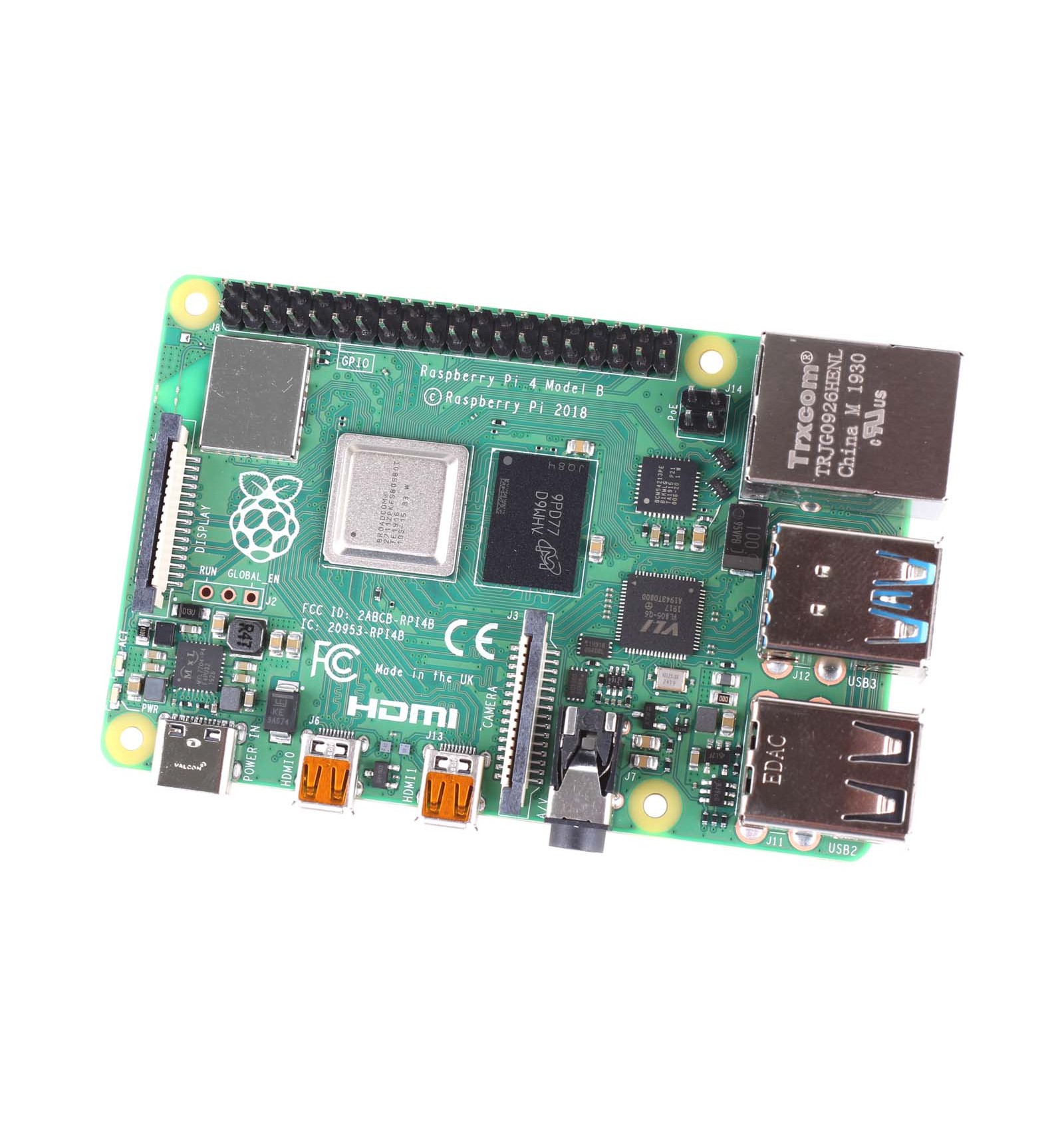
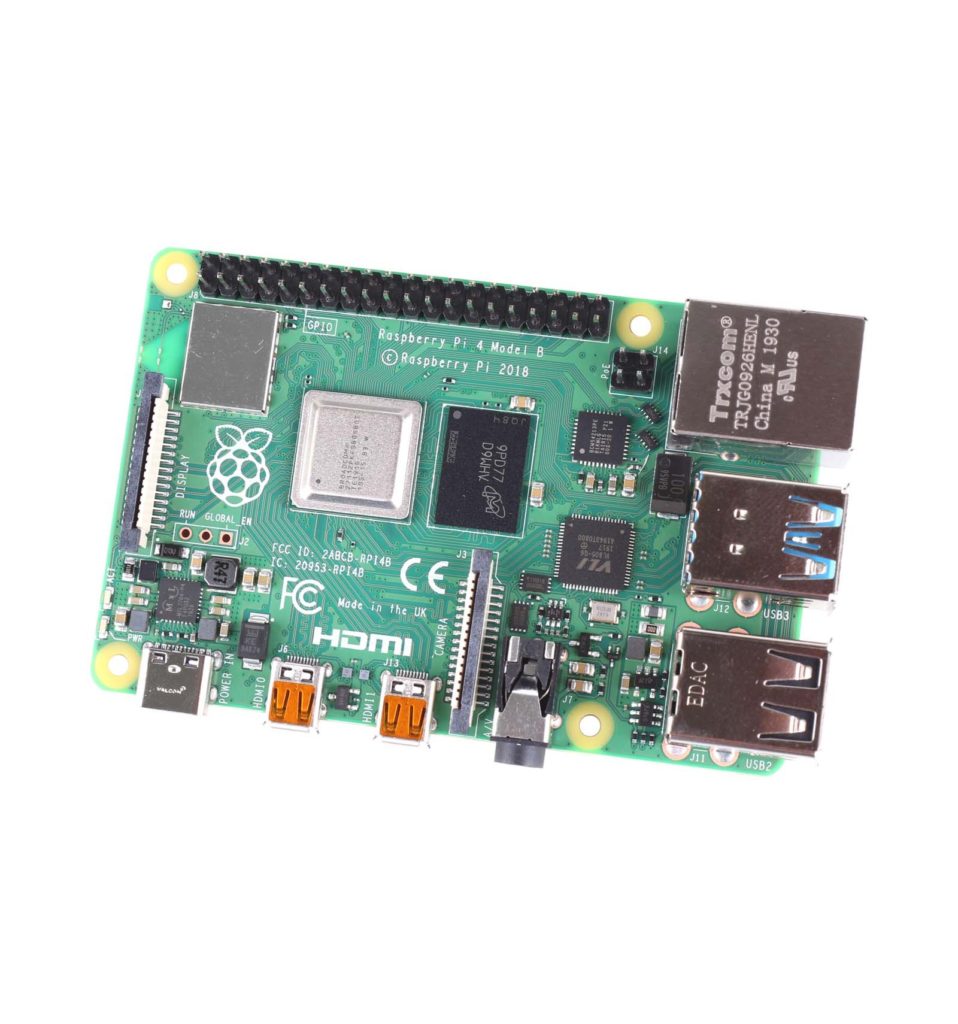
The moment we’ve all been waiting for has finally arrived, and The Raspberry Pi 4 Model B 4G is now available from DIYElectronics!
The Raspberry Pi Foundation is a brand that just never seems to run out of steam, and after the release of the Raspberry Pi 3 Model B+, the brand dramatically grew in popularity due to the high level of functionality and incredibly low cost – two factors that are amazing for hobbyists like us. However, the recent release of the Raspberry Pi 4 has stepped up this offering even more, offering processing power and functionality that even rivals full-sized entry-level computers! This means that you, as a Pi Maker, have a lot more power to work with, opening up so many more opportunities for building awesome projects that blow the minds of your friends, family, colleagues, pets and even yourself!
SO HOW IS THE RASPBERRY PI 4 BETTER THAN THE RASPBERRY PI 3 B+?
This is the question in everyone’s minds right now, and we’re quite excited to tell you all about the many small and large improvements that the Pi 4 is ready to bring to the table. So, in terms of upgrades since the Pi 3 B+, the Raspberry Pi 4 Model B 4GB SBC has been improved in every single way, from a more powerful CPU, to more RAM, to more video outputs, and so much more. However, to just mention these upgrades without digging further into the juicy details would do the Pi 4 a great disservice, so let’s explore the fancy, functional and fantastic upgrades a little more – in a convenient and easy to read bullet point format:
Vastly More Powerful CPU – As the main brains behind these little single-board-computers, the Raspberry Pi 4 has been equipped with an extremely powerful Broadcom BCM2711B0 Cortex A-72processor. This is around 4 times more powerful than the Cortex-A53 on the Pi 3 B+, and achieves this power increase by catering to many of the small bottle-necking problems that were simply unavoidable with the previous chip architecture. This means that you can expect much more power from the Pi 4, without any drawbacks, allowing you to really step up your projects in terms of both processing speed, as well as complexity.
Higher Capacity AND Quality Memory – While a lot of people will initially look at the increased RAM and simply think that it’s a larger size, some may not realise that the new type of memory (LPDDR4 SDRAM) also makes a huge difference. Additionally, with a full 4GB of RAM on this model, you can expect not just 4 times the speed, but actually quite a lot more due to the more modern type of RAM that has been integrated. This makes the RAM both larger than previously, as well as faster with a higher frequency, which of course translates to reliable speed and a genuinely amazing benefit that anyone who worked with previous Pi Boards will appreciate.
More Serial Capabilities for Makers – As you will all know, Raspberry Pi Boards are designed for Makers and those interested in learning, and as such always featured convenient UART, I2C and SPI buses to communicate or interface with various low-level modules, sensors and other components. And as Makers, we can’t help but drool over the enhanced serial functionality of the Pi 4, with 4 UART Buses, 4 SPI Buses and 4 I2C Buses – allowing us to really take advantage of the processing power for our strange, wonderful and sometimes whacky Electronics projects.
A MAJOR Step Up for Audio/Video Output – Raspberry Pi has always been a great development platform to work with, offering an incredibly wide range of functionality from basic low-level peripheral projects all the way up to full computer capabilities. However, one area in which Pi boards have always left users wanting more is in the audio/video output. With the Raspberry Pi 4 and the integrated VideoCore VI (6), however, this is a thing of the past, and you can now enjoy Dual 4K30 HDMI Outputs or a Single 4K60 Output via the Micro HDMI ports. Additionally, the PWM functionality of the Pi 4 is no longer shared with the analogue audio output on the 3.5mm AV jack, as it was on previous models, allowing users to take full advantage of all of the different audio/video output options – without having to compromise or sacrifice functionality in other areas.
Now, don’t get us wrong, there are certainly many other awesome upgrades that have been made to the new Pi 4, but we felt that the above were the most exciting few that we as Makers can really take advantage of. As such, let’s take a look at a brief summary of all of the new features and specifications of the Pi 4, and then some of the awesome use cases that you can expect to enjoy when you finally get your hands on one of these beautiful boards.
| RASPBERRY PI 4 MODEL B 4GB – TECHNICAL SPECIFICATIONS: | |
| Processor | – Broadcom BCM2711B0 (Quad-Core Cortex A-72) |
| Clock Speed | – 1.5GHz |
| RAM | – 4GB (LPDDR4 SDRAM) |
| Storage | – Micro SD Card |
| GPIO Header | – Expanded 40-pin (2 x 20 strip) |
| USB Ports | – 2 x USB2.0 | 2 x USB3.0 |
| GFX Architecture | – VideoCore VI (6) 500MHz / 600MHz OC |
| Video/Audio Outputs | – 2 x Micro HDMI Ports– 3.5mm Analogue Audio-Video Jack– 2-Lane Display Serial Interface (MIPI DSI)– USB Ports |
| Video Input | – 2-Lane Camera Serial Interface (MIPI CSI) |
| Video Codec Support | – H.256 | MPEG2 | MPEG4 | H.263 |
| Ethernet | – True Gigabit Ethernet (1000Mbps) |
| WiFi | – IEEE 802.11b/g/n/ac (2.4GHz / 5GHz) |
| Bluetooth | – Bluetooth 5.0 | BLE |
| Power Requirements | – 5V DC @ 3A via USB-C– 5V DC via GPIO Header– Power Over Ethernet (PoE) via PoE HAT |
| Low-Level Peripherals | – 27 GPIO Pins (General Purpose Input/Output)– 4 x UART Serial Buses– 4 x SPI Buses– 4 x I2C Buses |
| Firmware Support | – Raspbian Buster / Stretch / Jessie– LibreELEC– Arch Linux– OSMC– More to Follow |
| Weight | – 46g |
| Dimensions | – 88 x 58 x 19.5mm |