
Things
Have a look at these items I found online, some are life changing.
The Only Knot You Need To Know… Here’s Why
Staying in Tokyo’s Girls-Only Capsule Hotel!
TINY 8 SQUARE METERS TOKYO APARTMENT TOUR- Updated!
Incredible Rolling Objects which aren’t Spheres!
A History Teacher Reacts | “10 Myths You Still Believe About WW2” by All Time 10’s
Why Ceramic Knives Are Almost IMPOSSIBLE to Sharpen!
JAWBREAKERS | How It’s Made
2019 US Meal Halal Individual MRE Review Saag Chole with Lamb Ration Taste Testing
BEGIN Japanology – Sake
Adam Savage Tests Boston Dynamics’ Spot Robot!
Royal game of Ur
Tom Scott vs Irving Finkel: The Royal Game of Ur | PLAYTHROUGH | International Tabletop Day 2017
Ganker EX- A Combat Robot You Use Your Hands To Fight With!
Smoot

The smoot /ˈsmuːt/ is a nonstandard, humorous unit of length created as part of an MIT fraternity prank. It is named after Oliver R. Smoot, a fraternity pledge to Lambda Chi Alpha, who in October 1958 lay down repeatedly on the Harvard Bridge (between Boston and Cambridge, Massachusetts) so that his fraternity brothers could use his height to measure the length of the bridge.[1]
Contents
Unit description[edit]
One smoot is equal to Oliver Smoot’s height at the time of the prank, 5 feet 7 inches (1.70 m).[2] The bridge’s length was measured to be 364.4 smoots (2,035 ft; 620.1 m) plus or minus one ear, with the “plus or minus” intended to express uncertainty of measurement.[3] Over the years the “or minus” portion has gone astray in many citations, including the markings at the site itself, but is recorded on a plaque by Smoot’s college class.[4]
History[edit]

Harvard Bridge plaque on the history of the Smoot
To implement his use as a unit of measure, Oliver Smoot repeatedly lay down on the bridge, let his companions mark his new position in chalk or paint, and then got up again. Eventually, he got tired from all this exercise and was carried thereafter by the fraternity brothers to each new position.[5][6]
Oliver Smoot graduated from MIT with the class of 1962, became a lawyer, and later became chairman of the American National Standards Institute (ANSI, 2001–02)[7] and then, president of the International Organization for Standardization (ISO, 2003–04).[8] He is the cousin of Nobel Prize winner George Smoot. The prank’s fiftieth anniversary was commemorated on October 4, 2008 as Smoot Celebration Day at MIT, which Smoot attended.[6]
In 2011, “smoot” was one of the 10,000 new words added to the fifth edition of the American Heritage Dictionary.[9][10]
On May 7, 2016, Oliver Smoot served as Grand Marshal of the alumni parade across the bridge, celebrating the 100th anniversary of MIT’s move from Boston to Cambridge.[11]
Practical use[edit]

100-smoot mark with the Charles River and Cambridge in the background
The bridge is marked with painted markings indicating how many smoots there are from where the sidewalk begins on the Boston river bank. The marks are repainted each semester by the incoming associate member class (similar to pledge class) of Lambda Chi Alpha.[12]
Markings typically appear every 10 smoots, but additional marks appear at other numbers in between. For example, the 70-smoot mark is accompanied by a mark for 69. The 182.2-smoot mark is accompanied by the words “Halfway to Hell” and an arrow pointing towards MIT. Each class also paints a special mark for their graduating year.[citation needed]
The markings have become well accepted by the public, to the degree that during the bridge renovations that occurred in the 1980s, the Cambridge Police department requested that the markings be restored, as they were used routinely in police reports to identify locations on the bridge. The renovators at the Massachusetts Highway Department went one better, scoring the concrete surface of the sidewalk on the bridge at 5-foot-7-inch (1.70 m) intervals instead of the conventional 6 feet (1.8 m).[13] The Lambda Zeta (MIT) chapter of Lambda Chi Alpha, which created the smoot markings, continues to repaint the markings once or twice per year.[14]
Google Calculator also incorporates smoots, which it reckons at exactly 67 inches (170.18 cm).[2] Google also used the smoot as an optional unit of measurement in their Google Earth software and Google Maps distance measurement tool.[15] In 2014, Google introduced a new Maps interface with a measurement tool that gives distances only in feet/miles and meters/kilometers.
MIT’s student-run college radio station, WMBR, broadcasts at a wavelength of 2 smoots (88.1 MHz).[16]
See also[edit]
References[edit]
- ^ Curran, Susan. “Spotlight: A salute to Smoot”. Massachusetts Institute of Technology. Retrieved August 13, 2015.
- ^ Jump up to:a b Google: “1 smoot in meters”
- ^ Tavernor, Robert (2007). “Preface”. Smoot’s Ear: The Measure of Humanity. Yale University Press. pp. xi–xvi. ISBN 978-0-300-12492-7.
- ^ “Smoot in Stone”. MIT News. Cambridge, Massachusetts: Massachusetts Institute of Technology. June 4, 2009. Retrieved July 20, 2010. Specifically noting the bridge’s length of 364.4 Smoots (+/- 1 ear), the plaque, a gift of the MIT Class of 1962, honors the prank’s 50th anniversary.
- ^ Kostoulas, Andy (October 12, 1999). “This Month In MIT History”. The Tech. Retrieved April 18, 2009.
- ^ Jump up to:a b Smoot Day on October 4, 2008
- ^ Oliver R. Smoot
- ^ MIT – a salute to Smoot Archived June 20, 2015, at the Wayback Machine
- ^ Cornish, Audie (November 13, 2011). “Looking Up Words In A Book Not So Strange Yet”. National Public Radio. Retrieved December 10, 2012.
- ^ “American Heritage Dictionary entry”. American Heritage Dictionary. Houghton Mifflin Harcourt Publishing Company. Retrieved December 10, 2012.
- ^ Fleming, Nicole (May 7, 2016). “By land and by water, MIT celebrates 100 years in Cambridge”. Boston Globe. Retrieved May 9, 2016.
- ^ Historic American Engineering Record (HAER) (1987). Harvard Bridge, Spanning Charles River at Massachusetts Avenue, Boston, Suffolk County, MA. Philadelphia: Department of the Interior. p. 5. http://hdl.loc.gov/loc.pnp/hhh.ma1293. Retrieved May 12,2009.[permanent dead link]
- ^ Fahrenthold, David A. “The Measure of This Man Is in the Smoot”. The Washington Post. Retrieved May 23, 2010.
- ^ Keyser describes his top five hacks – MIT News Office
- ^ Google Maps distance measurement tool
- ^ Wolfram|Alpha Can’t, June 13, 2017
Popol Vuh
‘Popol Vuh’ Is A Mayan Text Describing The Origin Of The World

Popol Vuh is a written text dating back to the mid-1500s, and its name translates to “Book of the People.” It is written in the Mayan language K’iche’ and discusses the creation of humans and animals. Two prominent characters are the Hero Twins, Hunahpu and Xbalanque, who ultimately become the sun and the moon. The book was found by a priest in Guatemala in the 1700s.
According to its creation myth, there was only sky and sea until the creators formed the Earth. Their first creatures were animals, then mud men, then wooden men, which did not work out so well. However, they eventually made four men out of corn. Later, while the men slept, the gods created women. The entire creation story can be heard in the video above.
http://www.mesoweb.com/publications/Christenson/PopolVuh.pdf
The Book of Soyga
‘The Book Of Soyga’ Is A Manuscript About Magic Of Unknown Origin
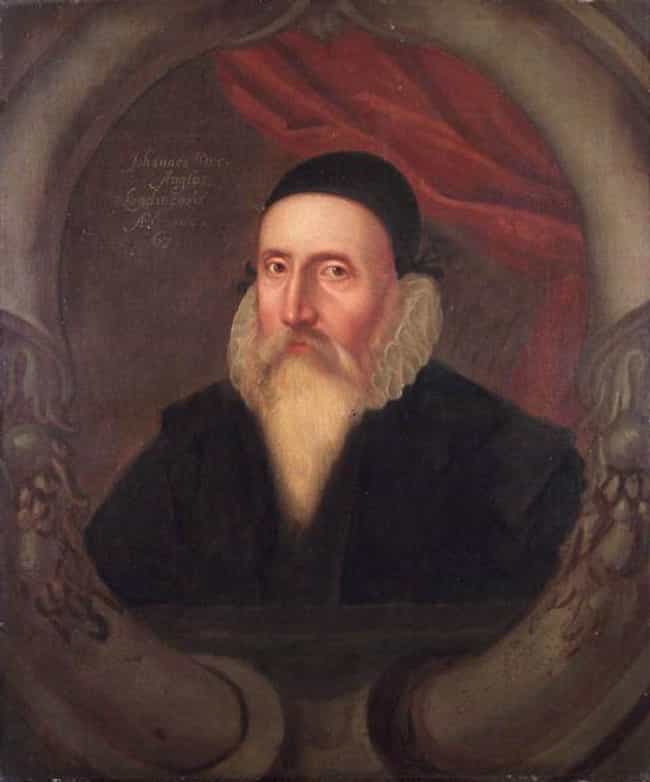
The Book of Soyga, also known as Aldaraia, is a book about magic. It is written in Latin and talks of demons, astrology, spells, and angels. Scholar John Dee, who was an advisor to Queen Elizabeth I, had a copy of the book in the 16th century, but it was lost after his passing. However, two copies of the book were found later: one in the British Library and the other in the Bodleian Library.
Dee was unable to figure out several tables contained in the book, and once attempted to talk to angels for help figuring the book out via Edward Kelley, a medium who purported to channel them.
http://www.esotericarchives.com/soyga/Book_of_Soyga_8x10.pdf
Voynich Manuscript
No One Has Ever Decoded The Voynich Manuscript

The Voynich Manuscript was purchased by Polish antique books dealer Wilfrid Voynich in 1912. It is a roughly 250-page book written in some kind of code that no one has ever been able to crack. It is believed to date back to the 15th century and is rife with illustrations of various herbs, animals, people, astrology, and maps.
Some believe the book may have been medicinal in nature. The book currently resides at Yale University’s Beinecke Rare Book and Manuscript Library.
https://www.holybooks.com/wp-content/uploads/Voynich-Manuscript.pdf
Paul Fotie Photenhauer – Natural Harvest
Natural Harvest, An inspirational collection of semen-based recipes by Paul “fotie” Photenhauer
New Inventions That Are At Another Level ▶30 #youtubevids

Holovect – Holographic Vector Display
The Holovect Mk II is a self-contained laser-based volumetric display system that fits on your lab bench or desktop. It is the perfect companion to a 3D printer and a stand-alone educational or promotional device. The Holovect Mk II is the first commercially available, laser-based desktop “holographic” display, capable of drawing 3D objects in air with light.

Holographic
Holovect images are NOT holograms but instead volumetric vector images projected onto modified air (i.e. projections in space). This distinction is due to the fact that a hologram is a recording of interference patterns on film or glass plates that contains three-dimensional information about an object (greek root “holo” means whole or complete, and “gram” means record). However, since Holovect images contain three dimensional information and are free-floating objects in air, they are most certainly holographic. They are real 3-D projections.
Mirage Technology
So how does it work? The principles are simple. When light travels between two different mediums in most cases you get three different effects to some degree: refraction (bending), reflection, and/or diffusion, depending on the different “refractive index” (RI) of the materials. An example of this are mirages, which occur when a portion of air has a different RI than its surroundings, causing light beams to bend and be reflected in unexpected ways. This can happen because of temperature or pressure differences from one region to the next.
With the holovect technology, we have invented how to control air within a box shaped section of space to precisely modify the RI within specific regions to refract and reflect a laser beam. This modification raises the “albedo” which is defined as the proportion of the incident light that is reflected by a surface, as well as the refractive properties at the boundary between the modified and unmodified air. Therefore by simultaneously controlling the aim of the laser and the position of a modified air column, a computer can place a volumetric pixel or voxel of light anywhere in 3D space. Then by keeping a laser beam on as it aims from point A to point B a line is drawn which is a 3D vector, and by joining many vectors in a sequence a holographic vector object can be generated. The Holovect Mk II is capable of drawing a complete image 50 times per second within
a 12cm by 12cm by 12cm cube we call the “drawbox”. Outside of this box things get messy, unpredictable and, in general, not useful.

VECTS
“Vect” objects are the data-structure developed for the Holovect. Put simply it is a list of 3D coordinates that result in lines drawn in a head-to-tail sequence in space, which are compiled into vect class objects. The files are straightforward and easy to create using a variety of online tools, spreadsheets, or good old pencil and graph paper. Once loaded, vects can be rotated in three axes and moved around within the cubic canvas. These objects can be manipulated using the control knob, preset functions such as spin and move, or used within your own applications.

3-D printing pre-visualizer and Applications
Holovect Mk II can be used to visualize CAD models in STL format before 3D printing. This can be done in two ways: importing STL files and convert them to vect format, or visualized directly. Depending on the desired visualization, converting the STL will result in a volumetric wireframe projection, whereas direct STL visualization slices the model into layers which is ideal to inspect for potential manufacturing errors and revise inner structure in hollow parts before printing. This volumetric pre-visualization ability increases design and manufacturing efficiency by saving time and printing material before committing to a long printing process.
Other applications include the visualization of 3D data acquired through a 3D scanner, or a computed tomography scan. Commercial applications could also include advertising and branding.

Beyond
As the community grows, our open source software philosophy will allow users to create applications that take advantage of Holovect’s glasses-free, touchable volumetric display. Games, tools and art applications are all in the works and should be available to users by shipping time. Moreover, the hardware will accommodate any advancements in 3D image capture and creation.
Risks and challenges
Our biggest challenge is producing enough units to keep costs low and maintain a large community of content creators. Your contributions will help our efforts and push this nascent technology further than even our imaginations can predict.
We have spent a year redesigning and streamlining the product and production line. We are ready to put considerable amount of units into the hands of developers, early adopters and enthusiasts. Help us make Holovect the standard of holographic volumetric displays.

Dwarf Fortress
Dwarf Fortress (officially called Slaves to Armok: God of Blood Chapter II: Dwarf Fortress) is a part construction and management simulation, part roguelike, indie video game created by Tarn and Zach Adams. Freeware and in development since 2002, its first alpha version was released in 2006 and it received attention for being a two-member project surviving solely on donations. The primary game mode is set in a procedurally generated fantasy world in which the player indirectly controls a group of dwarves, and attempts to construct a successful and wealthy underground fortress. Critics praised its complex, emergent gameplay but had mixed reactions to its difficulty. The game influenced Minecraft and was selected among other games to be featured in the Museum of Modern Art to show the history of video gaming in 2012.
The game has text-based graphics and is open-ended with no main objectives. Before playing, the player has to set in motion a process which generates worlds with continents, oceans and histories documenting civilizations. The main game mode, Dwarf Fortress, consists of selecting a suitable site from the generated-world, establishing a successful colony or fortress, combating threats like goblin invasions, generating wealth and taking care of the dwarves. Each dwarf is modeled down to its individual personality, has likes or dislikes and possesses specific trainable skills in various labors. The second main game mode, Adventurer, is a turn-based, open-ended roguelike mode where the player starts off as an adventurer in the world and is free to explore, complete quests, or even visit old abandoned fortresses. The combat system is anatomically detailed with combat logs describing events like organs getting pierced, fat getting bruised and limbs getting severed.
Prior to Dwarf Fortress, Tarn Adams was working on a project called Slaves to Armok: God of Blood which was a role-playing game. By 2004, Adams decided to shift from the original Armok to Dwarf Fortress after the former became difficult to maintain. Adams calls it his life’s work and said in 2011 that version 1.0 will not be ready for at least another 20 years, and even after that he would continue to work on it. The game has a cult following and an active online community. As there is no way to win, every fortress, no matter how successful, is usually destroyed somehow. This prompts the official community motto: “Losing is Fun!”

Pantone

Pantone provides a universal language of color that enables color-critical decisions through every stage of the workflow for brands and manufacturers. More than 10 million designers and producers around the world rely on Pantone products and services to help define, communicate and control color from inspiration to realization – leveraging advanced X-Rite technology to achieve color consistency across various materials and finishes for graphics, fashion and product design. Pantone Standards feature digital and physical color specification and workflow tools. The Pantone Color Institute™ provides customized color standards, brand identity and product color consulting as well as trend forecasting inclusive of Pantone Color of the Year, Fashion Runway Color Trend Reports, color psychology and more. Pantone B2B Licensing incorporates the Pantone Color System into different products and services, enabling licensees to communicate and reproduce approved Pantone values and improve efficiencies for their users. Pantone Lifestyle brings color and design together across apparel, home, and accessories. Learn more and connect with Pantone on Instagram, Facebook, Pinterest, and LinkedIn.

About Pantone Standards
In 1963, Pantone revolutionized the printing industry with the colorful PANTONE MATCHING SYSTEM®, an innovative tool allowing for the faithful selection, articulation and reproduction of consistent, accurate color anywhere in the world. The tool organizes color standards through a proprietary numbering system and chip format, which have since become iconic to the Pantone brand.
Pantone’s color language supports all color conscious industries; textiles, apparel, beauty, interiors, architectural and industrial design, encompassing over 10,000 color standards across multiple materials including printing, textiles, plastics, pigments, and coatings.
Pantone Standards are available both digitally and physically. Integrated workflow tools such as PantoneLIVE and Pantone Studio, ensure market-relevancy and color achievability as technology continues to transform the design process.

About Pantone Lifestyle
An iconic name in the fashion, product, graphic design and lifestyle-oriented industries, Pantone is a symbol of the design-minded. Pantone Lifestyle, the consumer-licensing division of Pantone, offers consumer products inspired by the signature Pantone chip design, to infuse daily life with intentional color and patterns.
The Pantone Lifestyle division celebrates a modern design aesthetic and bold use of color, brought to life through collaborations with likeminded brands and licensing partnerships in categories including home furnishings, apparel, beauty, travel, and desktop accessories.SHOP PANTONE LIFESTYLE

About Pantone Color Institute
The Pantone Color Institute™ is a consulting service within Pantone that forecasts global color trends and advises companies on color in brand identity and product development, for the application and integration of color as a strategic asset. Recognized around the world as a leading source of color information through seasonal trend forecasts, custom color development, and palette recommendations for product and corporate identity, Pantone Color Institute partners with global brands to leverage the power, psychology and emotion of color in their design strategy.LEARN MORE


Our Parent X-Rite
Headquartered in Grand Rapids, Michigan, X-Rite is a global company with locations around the world. Experts in blending the art and science of color, they focus on providing complete end-to-end color management solutions for their clients in every industry where color matters.LEARN MORE
Colors of the Year
2020Classic Blue19-40522019Living Coral16-15462018Ultra Violet18-38382017Greenery15-03432016Rose Quartz13-15202016Serenity15-39192015Marsala18-14382014Radiant Orchid18-32242013Emerald17-56412012Tangerine Tango17-14632011Honeysuckle18-21202010Turquoise15-55192009Mimosa14-08482008Blue Iris18-39432007Chili Pepper19-1557
2006

Sand Dollar
13-1106
2005
Blue Turquoise
15-5217
2004
Tigerlily
17-1456
2003
Aqua Sky
14-4811
2002
True Red
19-1664
2001
Fuchsia Rose
17-2031
2000
Cerulean Blue
15-4020

DIY Electronics
https://www.diyelectronics.co.za/
DIYElectronics is commited as a company to provide you with the widest range of electronics to suit your professional or hobby needs. We understand that good electronics is important to any project, we also understand that every new project brings a host of new challenges. That is why we have created this WIKI for you, to help you in your projects, whether you are buying your first 3d printer or building a rocket to the moon, our aim is to make every step of your creative journey just a little bit easier.

Dealzer
Dealzer has some interesting items for sale that focuses on hydroponics and indoor plant growing.
As I have the scenario set up from many years of reading castaway type stories I have been on the lookout for plant growing systems that would work underground or in space. Mars here I come…