
Yearly Archives: 2020
BEST CUBE #353
Jail Fires Back At Judge’s Rant Over ‘Pantless’ Defendant | USA TODAY
Why Do Computers Die? (ft. The 8-Bit Guy) – Krazy Ken’s Tech Talk
Owner Of a Property Management Company Loses Business For Illegally Evicting My Tenant r/ProRevenge
How About a Nice Cuppa TEA Laser?
If lasers are your hobby, you face a conundrum. There are so many off-the-shelf lasers that use so many different ways of amplifying and stimulating light that the whole thing can be downright — unstimulating. Keeping things fresh therefore requires rolling your own lasers, and these DIY nitrogen TEA and dye lasers seem like a fun way to go.
These devices are the work of [Les Wright], who takes us on a somewhat lengthy but really informative tour of transversely excited atmospheric (TEA) lasers. The idea with TEA lasers is that a gas, often carbon dioxide in commercial lasers but either air or pure nitrogen in this case, is excited by a high-voltage discharge across long parallel electrodes. TEA lasers are dead easy to make — we’ve covered them a few times — but as [Les] points out, that ease of construction leads to designs that are more ad hoc than engineered.
In the video below, [Les] presents three designs that are far more robust than the typical TEA laser. His lasers use capacitors made from aluminum foil with polyethylene sheets for dielectric, sometimes with the addition of beautiful “doorknob” ceramic caps too. A spark gap serves as a very fast switch to discharge high voltage across the laser channel, formed by two closely spaced aluminum hex bars. Both the spark gap and the laser channel can be filled with low-pressure nitrogen. [Les] demonstrates the power and the speed of his lasers, which can even excite laser emissions in a plain cuvette of rhodamine dye — no mirrors needed! Although eye protection is, of course.
These TEA lasers honestly look like a ton of fun to build and play with. You might not be laser welding or levitating stuff with them, but that’s hardly the point.
source https://hackaday.com/2020/08/09/how-about-a-nice-cuppa-tea-laser/
Covid Karen Knows The Law Better Than You Do – Karens On Camera
BEST CUBE #338
Talk Heathen 04.32 with Eric Murphy and Vi La Bianca
Best To Not Do 1st Amendment Auditing When You Have 9 Active Arrest Warrants
Does this old induction motor still work?
Watch on YouTube here: Does this old Induction Motor still work? || How do Asynchronous Motors work? EB#46
Via Christian Gasper
from Blogger https://ift.tt/33IdZ6c
via IFTTT
Karen at the store Demands to See The Owner ! Take My Business Card | r/IDontWorkHereLady
Cops Chasing 2 Young Kids Fabricating Explosives | Beach Cops | Real Responders
Recreating Early Apple Mice For the Modern Era
At a time when practical graphical user interfaces were only just becoming a reality on desktop computers, Apple took a leap of faith and released one of the first commercially available mice back in 1983. It was criticized as being little more than a toy back then, but we all know how that particular story ends.
While the Apple G5431 isn’t that first mouse, it’s not too far removed. So much so that [Stephen Arsenault] believed it was worthy of historic preservation. Whether you want to print out a new case to replace a damaged original or try your hand at updating the classic design with modern electronics, his CAD model of this early computer peripheral is available under the Creative Commons license for anyone who wants it.
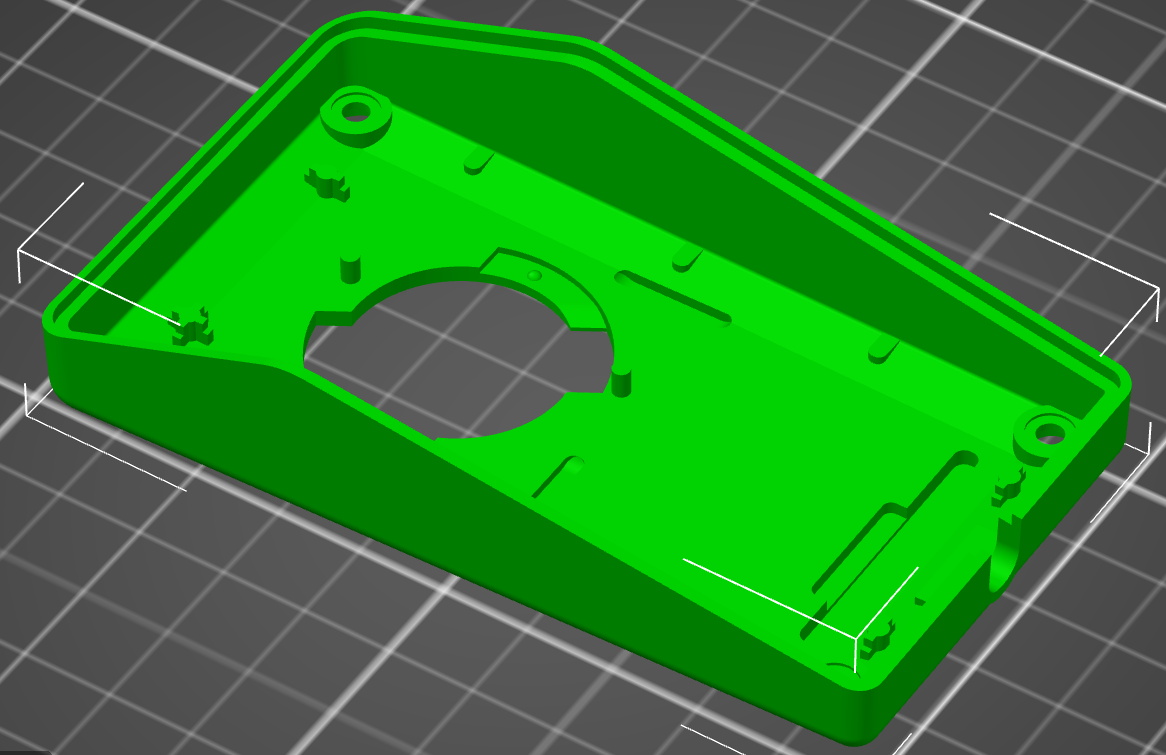
[Stephen] tells us that he was inspired to take on this project after he saw new manufactured cases for the G5431 popping up online, including a variant made out of translucent plastic. Realizing that 1986 product is old enough that Apple (probably) isn’t worried about people cloning it, he set out to produce this definitive digital version of the original case components for community use.
With these 3D models available, [Stephen] hopes that others will be inspired to try and modify the iconic design of the G5431. Perhaps by creating a Bluetooth version, or adding the ability to right-click. Considering we’ve already seen custom PCBs for mice, it’s hardly a stretch. We’d love to see somebody take him up on the offer, but even if not, the digital preservation of computer history is always welcome.
source https://hackaday.com/2020/08/09/recreating-early-apple-mice-for-the-modern-era/
John Battman 3: “Just Us Friends” – Cyanide & Happiness Shorts
Recreating Early Apple Mice For the Modern Era
At a time when practical graphical user interfaces were only just becoming a reality on desktop computers, Apple took a leap of faith and released one of the first commercially available mice back in 1983. It was criticized as being little more than a toy back then, but we all know how that particular story ends.
While the Apple G5431 isn’t that first mouse, it’s not too far removed. So much so that [Stephen Arsenault] believed it was worthy of historic preservation. Whether you want to print out a new case to replace a damaged original or try your hand at updating the classic design with modern electronics, his CAD model of this early computer peripheral is available under the Creative Commons license for anyone who wants it.
[Stephen] tells us that he was inspired to take on this project after he saw new manufactured cases for the G5431 popping up online, including a variant made out of translucent plastic. Realizing that 1986 product is old enough that Apple (probably) isn’t worried about people cloning it, he set out to produce this definitive digital version of the original case components for community use.
With these 3D models available, [Stephen] hopes that others will be inspired to try and modify the iconic design of the G5431. Perhaps by creating a Bluetooth version, or adding the ability to right-click. Considering we’ve already seen custom PCBs for mice, it’s hardly a stretch. We’d love to see somebody take him up on the offer, but even if not, the digital preservation of computer history is always welcome.
source https://hackaday.com/2020/08/09/recreating-early-apple-mice-for-the-modern-era/
LEGO Room Tour (Ep1) – Kevin Hinkle
Recreating Early Apple Mice For the Modern Era
At a time when practical graphical user interfaces were only just becoming a reality on desktop computers, Apple took a leap of faith and released one of the first commercially available mice back in 1983. It was criticized as being little more than a toy back then, but we all know how that particular story ends.
While the Apple G5431 isn’t that first mouse, it’s not too far removed. So much so that [Stephen Arsenault] believed it was worthy of historic preservation. Whether you want to print out a new case to replace a damaged original or try your hand at updating the classic design with modern electronics, his CAD model of this early computer peripheral is available under the Creative Commons license for anyone who wants it.
[Stephen] tells us that he was inspired to take on this project after he saw new manufactured cases for the G5431 popping up online, including a variant made out of translucent plastic. Realizing that 1986 product is old enough that Apple (probably) isn’t worried about people cloning it, he set out to produce this definitive digital version of the original case components for community use.
With these 3D models available, [Stephen] hopes that others will be inspired to try and modify the iconic design of the G5431. Perhaps by creating a Bluetooth version, or adding the ability to right-click. Considering we’ve already seen custom PCBs for mice, it’s hardly a stretch. We’d love to see somebody take him up on the offer, but even if not, the digital preservation of computer history is always welcome.
source https://hackaday.com/2020/08/09/recreating-early-apple-mice-for-the-modern-era/
Minecraft 200IQ Plays That Will Blow Your Mind Compilation #2
WHERE IS YOUR BOSS ! I Want you Fired now ! First ask the Store Manage Who I Am r/IDontWorkHereLady
Electronic Repair Adventure- Radio Receiver Troubleshooting!
Bizarre Looking RCA Radio! [Electrical Restoration]
OAK Vision Modules Help You See The Forest And The Trees
OpenCV is an open source library of computer vision algorithms, its power and flexibility made many machine vision projects possible. But even with code highly optimized for maximum performance, we always wish for more. Which is why our ears perk up whenever we hear about a hardware accelerated vision module, and the latest buzz is coming out of the OpenCV AI Kit (OAK) Kickstarter campaign.
There are two vision modules launched with this campaign. The OAK-1 with a single color camera for two dimensional vision applications, and the OAK-D which adds stereo cameras for that third dimension. The onboard brain is a Movidius Myriad X processor which, according to team members who have dug through its datasheet, have been massively underutilized in other products. They believe OAK modules will help the chip fulfill its potential for vision applications, delivering high performance while consuming low power in a small form factor. Reading over the spec sheet, we think it’s fair to call these “Ultimate Myriad X Dev Boards” but we must concede “OpenCV AI Kit” sounds better. It does not provide hardware acceleration for the entire OpenCV library (likely an impossible task) but it does cover the highly demanding subset suitable for Myriad X acceleration.
Since the campaign launched a few weeks ago, some additional information have been released to help assure backers that this project has real substance. It turns out OAK is an evolution of a project we’ve covered almost exactly one year ago that became a real product DepthAI, so at least this is not their first rodeo. It is also encouraging that their invitation to the open hardware community has already borne fruit. Check out this thread discussing OAK for robot vision, where a question was met with an honest “we don’t have expertise there” from the OAK team, but then ArduCam pitched in with their camera module experience to help.
We wish them success for their planned December 2020 delivery. They have already far surpassed their funding goals, they’ve shipped hardware before, and we see a good start to a development community. We look forward to the OAK-1 and OAK-D joining the ranks of other hacking friendly vision modules like OpenMV, JeVois, StereoPi, and AIY Vision.
source https://hackaday.com/2020/08/09/oak-vision-modules-help-you-see-the-forest-and-the-trees/